
It's 6 a.m. and your phone rings. It's the agency. Your mother's caregiver, the one she's had for eight months, the one who knows exactly how she likes her coffee and which chair hurts her hip least, just called out sick. Who is showing up at her door in two hours?
For most families in Connecticut using a home care agency, the honest answer is: a stranger.
What actually happens at most agencies when a caregiver calls out
Here's what the home care industry doesn't put on its website. When a caregiver calls off, a scheduler starts working the phones, texting down a list of on-call staff, hoping someone picks up and is free. If someone does, that person is often a caregiver your parent has never met, walking into a home they don't know, working from notes instead of experience, on a day when routine and familiarity matter most.
Some agencies lean on scheduling software and open-shift marketplaces that post the gap to a pool of caregivers, sometimes even from a different agency entirely, and let whoever bids first take the shift. Others rely on a general on-call list with no guarantee the person who shows up has ever set foot in that house. Families who've been through it describe the same thing: frantic calls, a scramble, and a caregiver at the door who is a total unknown.
That's not backup coverage. That's damage control.
What we built instead
Maggie Drag has run Euro-American Homecare for 37 years, and this exact problem, the 6 a.m. call-out with no real plan, is one she solved a long time ago.
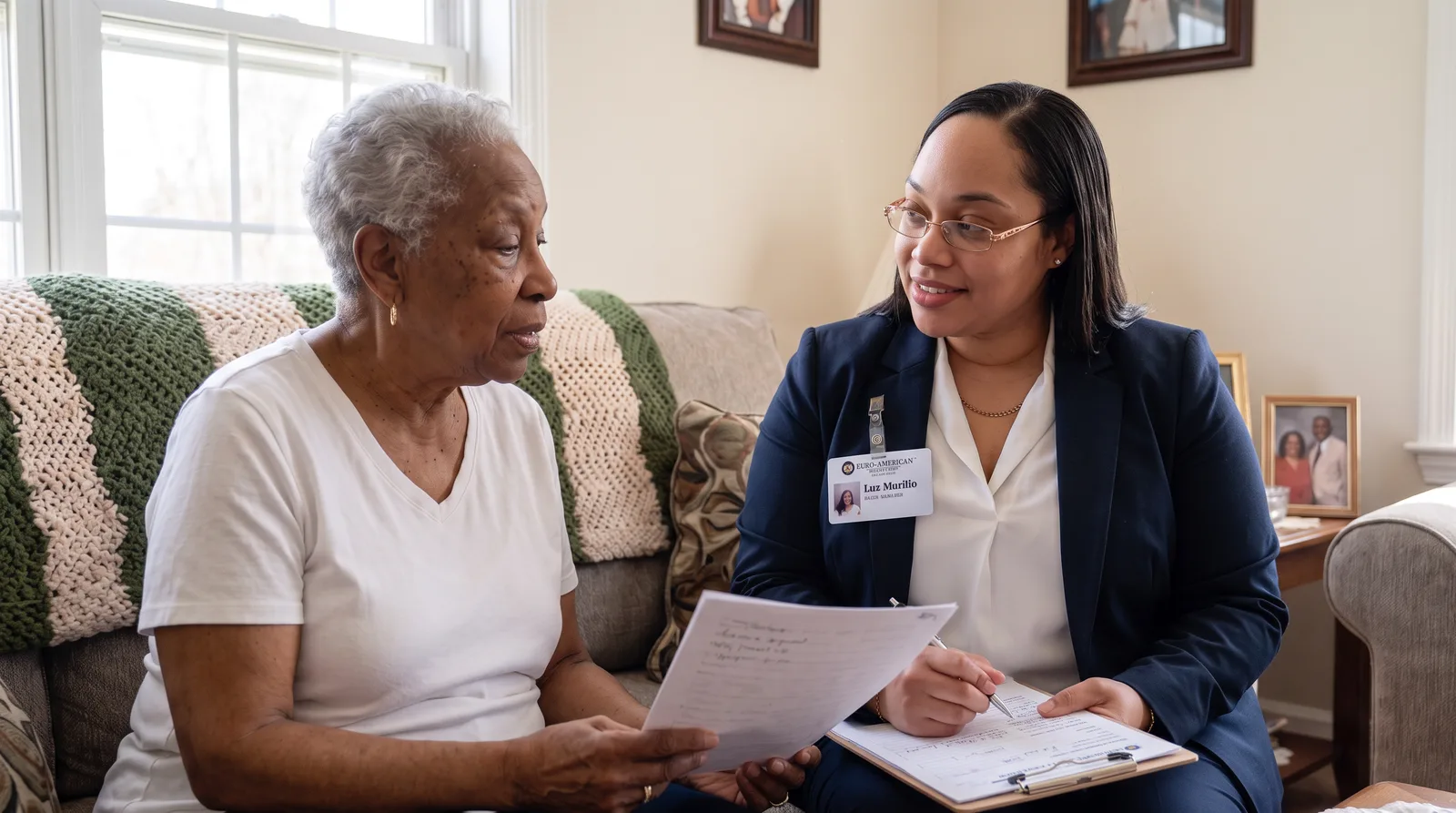
Every client on our roster is visited monthly by one of two field supervisors, not as a formality, but as an actual part of how we deliver care. That means when a regular caregiver is sick, or simply unavailable, the person who steps in isn't a stranger reading a file. It's someone who has already sat in that living room, already knows the client's routine, mobility level, plan of care, and personality, and already has a relationship with the family.
One of our two field supervisors is a certified CNA. The other brings a medical background from his home country of Germany. Between the two of them, every client has real backup, not a name on a list, but a person who has been in the home before and knows exactly what that client needs the moment they walk through the door.
The state minimum is not the same as a real plan
Here's something most families never think to ask about. The Connecticut Department of Consumer Protection requires licensed home care agencies to conduct a field supervisory visit at least once every two months. That is the floor, not a guarantee of quality. An agency can be fully compliant with state regulations and still only have a supervisor lay eyes on your caregiver once every eight weeks, which says nothing about who is trained and ready to step in on the days in between.
Meeting the minimum is not the same as having a plan. A supervisor who checks in every two months knows a client in passing. A supervisor who checks in every month knows that client well enough to actually provide their care when someone calls out sick. That difference is the whole point of building real backup coverage instead of just staying licensed.
Why this actually matters
Continuity isn't a nice extra in home care. For an elderly client, a new face on a hard day, paired with confusion about routine and no prior relationship, can mean a bad fall, a missed medication, or a morning that spirals into a crisis. Familiarity is safety. A supervisor who already knows the client isn't learning on the job while your parent waits.
It also means something for peace of mind. When you're the one making the decision about who cares for your mother or father, "we'll find someone" is not an answer. "We have someone who already knows them" is.
The question to ask any home care agency
If you're evaluating home care in Connecticut, whether it's us or anyone else, ask this direct question: What happens if my regular caregiver is sick or unavailable? Who exactly shows up, and have they met my family member before? And while you're at it, ask how often their supervisors actually visit, not just what the state requires them to do.
If the answer is vague, that's your answer. At Euro-American Homecare, it isn't. It's a specific person, already known to your family, already trained on your loved one's needs, ready to walk in the door.
That's not a policy on paper. That's 37 years of knowing exactly what families are afraid of, and building the system that fixes it.