
"My mother refuses help." I have heard this sentence at kitchen tables across Connecticut for 37 years. Usually from a tired daughter or son who has tried everything and is running out of patience, sleep and ideas.
If this is you, please hear me first: you are not failing. A parent who says "no" to help is one of the most common situations in elder care. And in my experience, "no" is rarely the final answer. It is usually "not like this" or "not yet."
Below I share why aging parents refuse help at home, and nine gentle ways families I have worked with turned that "no" into "yes."
Why your parent says "no" to help
When an elderly parent refuses help, it is almost never about the help itself. It is about what the help means to them. Behind the "no" there is usually a fear:
- Losing independence. "If I let someone in, next they will take my car, then my house."
- A stranger in the home. Their home holds their whole life. Letting a stranger in feels unsafe.
- Pride and dignity. Many of our parents raised families, ran businesses and survived hard times. Needing help with a shower feels like a defeat.
- Cost. They worry about spending the savings they meant to leave to you.
- Being a burden. Ironically, many parents refuse help because they do not want to trouble their children.
- Fear of the nursing home. Some believe accepting home care is the first step out of their house.
Once you know which fear is speaking, you can answer it. Arguing with the "no" only makes it stronger.
9 gentle ways to help your parent accept care at home
1. Make it about you, not them Many parents will not accept help for themselves, but they will do anything for their children. Try: "Mom, I worry about you every night. It would help me sleep if someone stopped by." You are not asking her to admit she needs help. You are asking her to give you peace of mind.
2. Don't call it "care" Words matter. "Caregiver" can sound like illness. Instead, talk about help with the cleaning, someone to drive you to church or the hairdresser, or a helper for the heavy groceries. Start with the task she dislikes most.
3. Start with a short trial "Just for two weeks while I'm away" or "only until your hip heals" feels safe because it has an end. In our experience, once a good relationship forms, very few families want it to stop.
4. Let the doctor say it Parents often hear their children's advice as nagging, but they respect their physician. Talk to the doctor before the next appointment and ask them to recommend help at home. A doctor's "prescription" for help carries weight.
5. Give your parent the choice Nobody likes decisions made for them. Let Mom meet the caregivers, ask her own questions and choose. People accept what they choose themselves.
6. Match the person, not just the schedule A good match changes everything. At Euro-American Homecare, we match personality, interests, routine and, when possible, language and culture. A caregiver who speaks Polish, cooks familiar food or shares a love of gardening feels like company, not a stranger.
7. Meet first in a friendly setting A first meeting at the kitchen table can feel like an inspection. A first meeting over coffee, at church or at the senior center feels like ordinary life. That is a big reason we started our free Creative Companionship hour back in 2019.
Our team brings a hands-on art project, snacks and plenty of good conversation to senior centers in Berlin, Cromwell, Farmington, Rocky Hill, Southington and West Hartford.
Your mother does not have to be our client to join. And if you feel she could use some help at home but is not ready to hear it, call us. We will pick a caregiver we think would be a good fit for her and arrange for them to join her at the art class. They will talk and get to know each other with no pressure at all. So, when she is ready for help, the person coming through her door is not a stranger. It is a friend from art class.
8. Frame it as help for your other parent When one spouse cares for the other, the healthy spouse often refuses help to prove they can manage. Try: "Dad, you need a break, or you'll get sick too. Then who will take care of Mom?" Respite care feels like a gift to the caregiver, not a judgment.
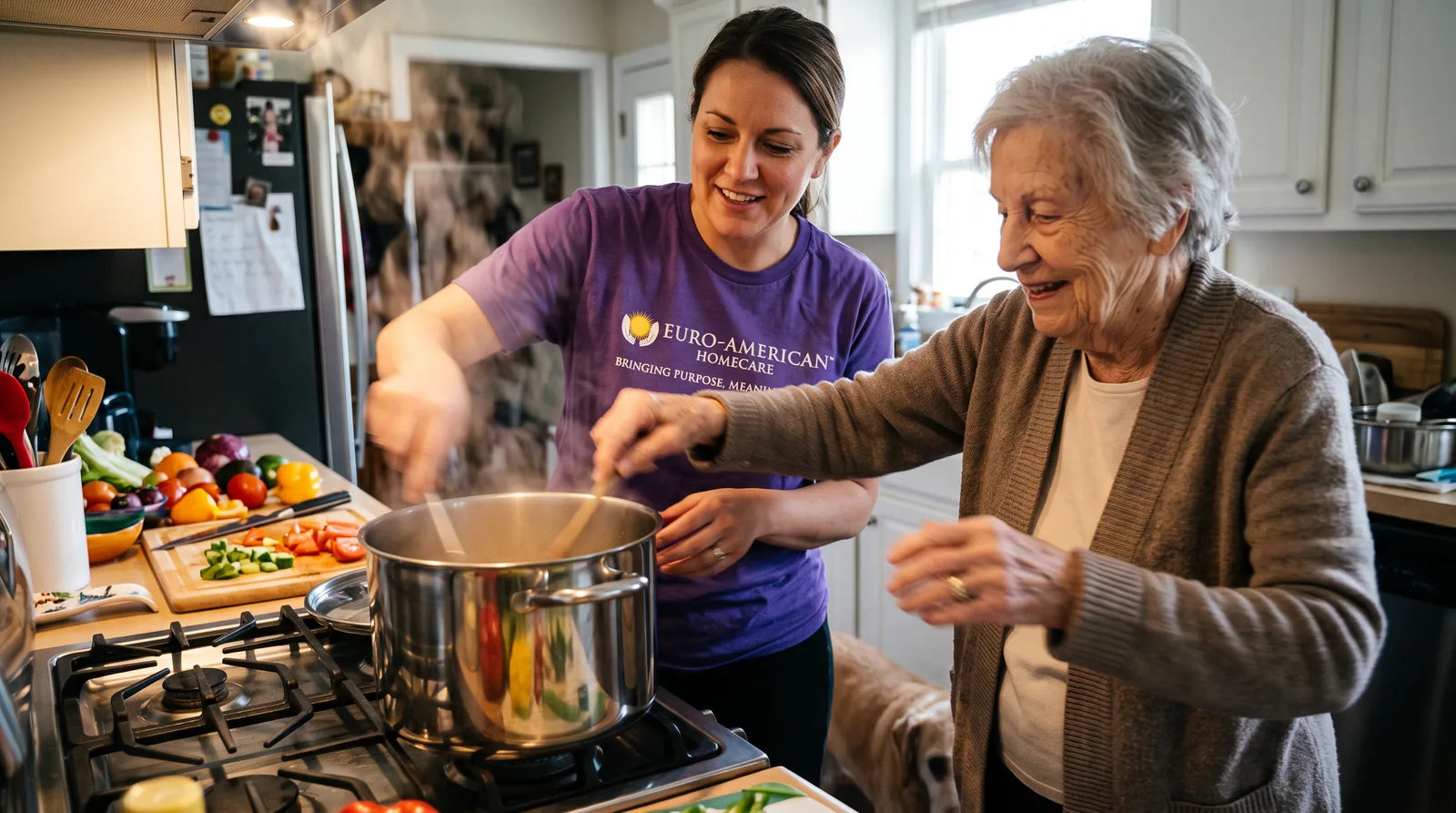
9. Give your parent a purpose Invite Mom to teach the caregiver her recipes, her garden or her family stories. She becomes the teacher, not the patient. Dignity grows when people feel useful.
Don't wait for a crisis: make a proactive plan of care
The hardest calls I receive come from a hospital hallway. Dad is being discharged in two days, and nobody knows what he wants. When families talk early, the parent keeps control and the family has choices. When they wait, the crisis decides.
How to start the conversation:
- Begin with values, not problems. Ask "What matters most to you about staying in your home?" instead of "You can't live alone anymore."
- Use a story. "My friend's mother fell, and nobody knew what she wanted. I don't want that for us."
- One topic at a time. You do not need to solve everything at one Sunday dinner.
- Agree on the "if." "If you fall again, or stop driving, what would you want to happen?"
What a good plan of care covers:
☐ Your parent's wishes: where and how they want to live
☐ A health care representative and power of attorney
☐ A list of doctors, medications and medical history in one place
☐ How care will be paid for
☐ Which family member is the main contact
☐ Which events will start home care (a fall, a hospital stay, a missed medication)
For the legal and financial items, talk with an elder law attorney or financial advisor.
You don't have to do this alone
A parent's "no" is not the end of the conversation. It is the beginning of a gentler one. Be patient, listen for the fear behind the words, and remember that you can be your parent's daughter or son again, not only their caregiver.
If your mother or father refuses help at home and you don't know where to start, call me. I have heard every "no" in 37 years, and I am happy to share what has worked for other Connecticut families. Euro-American Homecare offers live-in and hourly home care across central Connecticut, from Berlin and New Britain to West Hartford, Southington and beyond.
Call (860) 829-0208 or visit homecare4u.com for a free conversation.